How to Layer Rugs Like a Designer
The Pure Salt formula for layered rugs — which rug goes on the bottom, how big the top layer should be, and four layering moves beyond the living room.
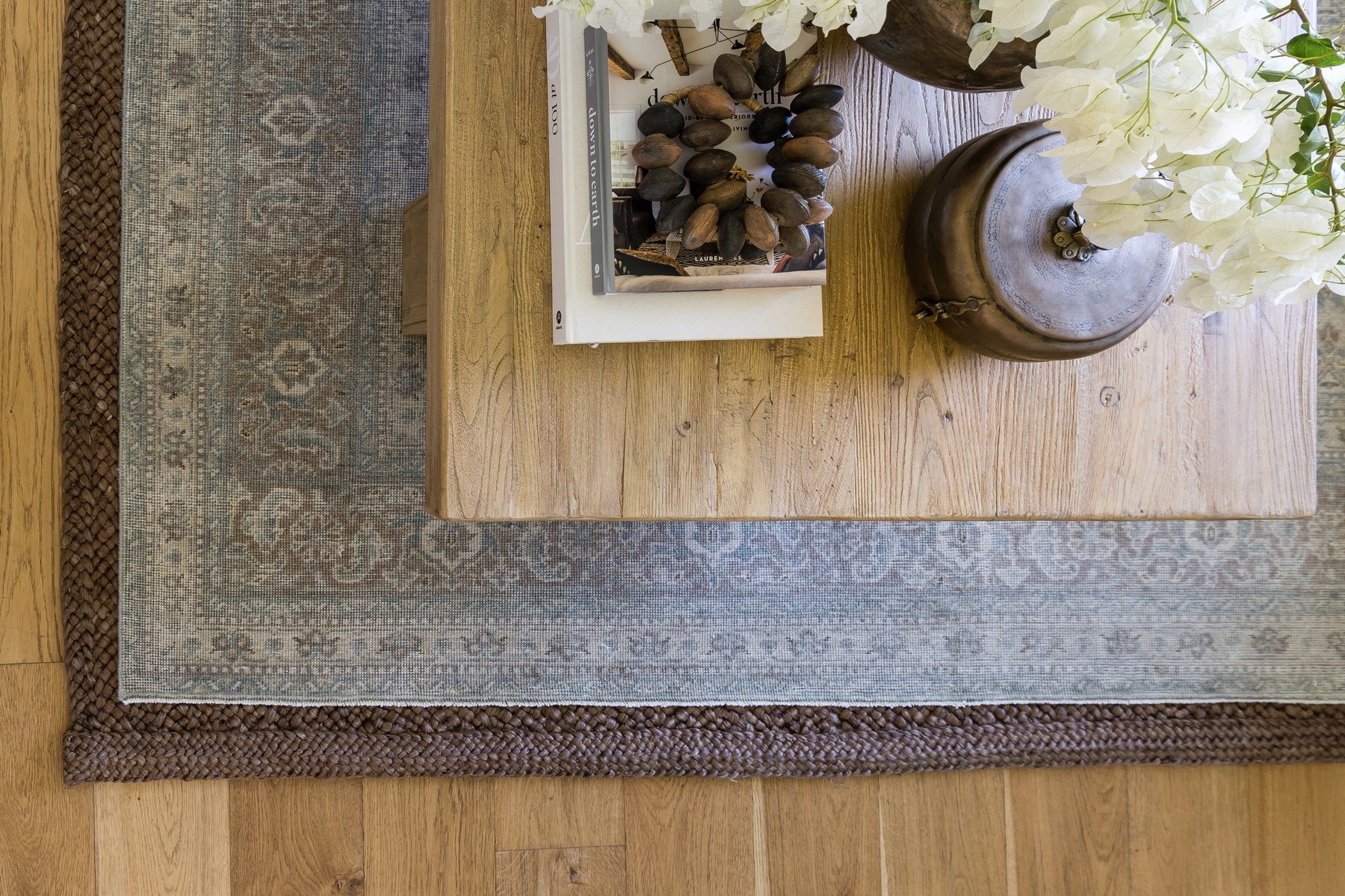
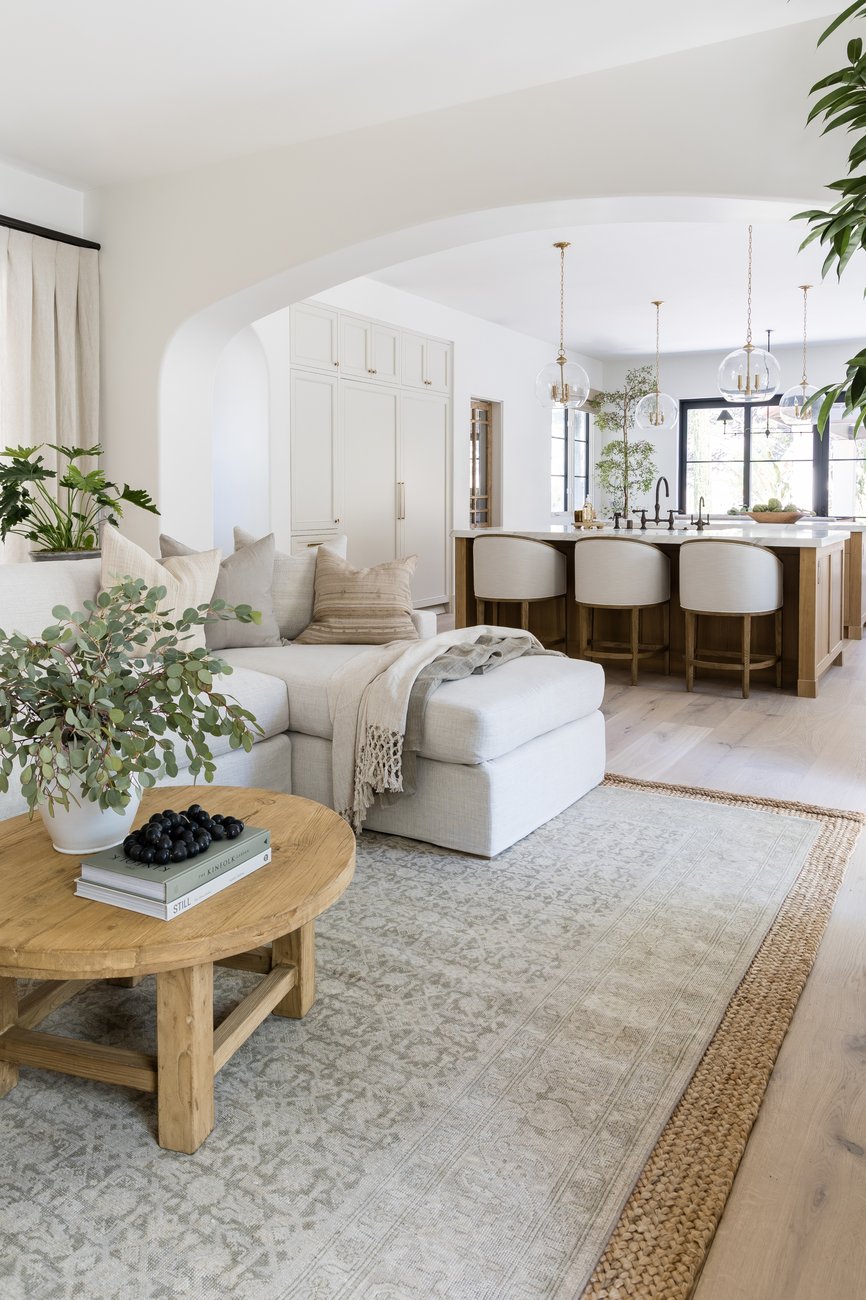
If one styling move defines the Pure Salt look from the floor up, it's this one. A layered rug pairing is how a room earns that collected, been-loved-for-years feeling on day one — and it happens to solve a pile of practical problems along the way: the smaller vintage rug you adore in a room that needs a 9x12, the plush texture you want in a spot that takes real traffic, the rental floor you can't change. Here's the whole formula.
01 // Step one: the base
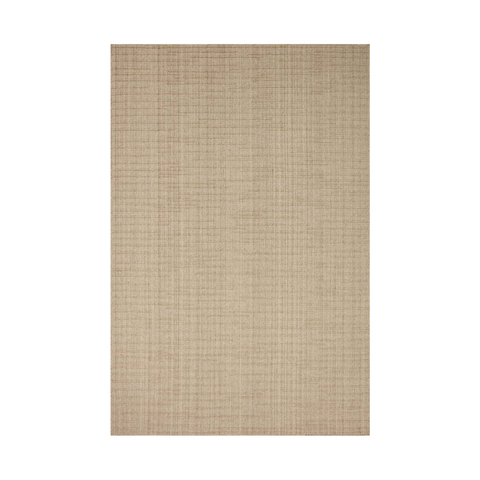
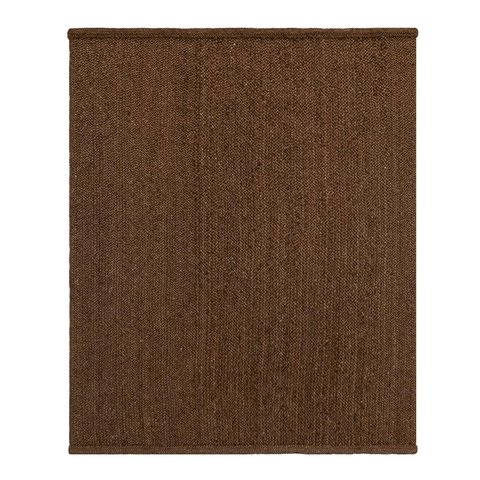
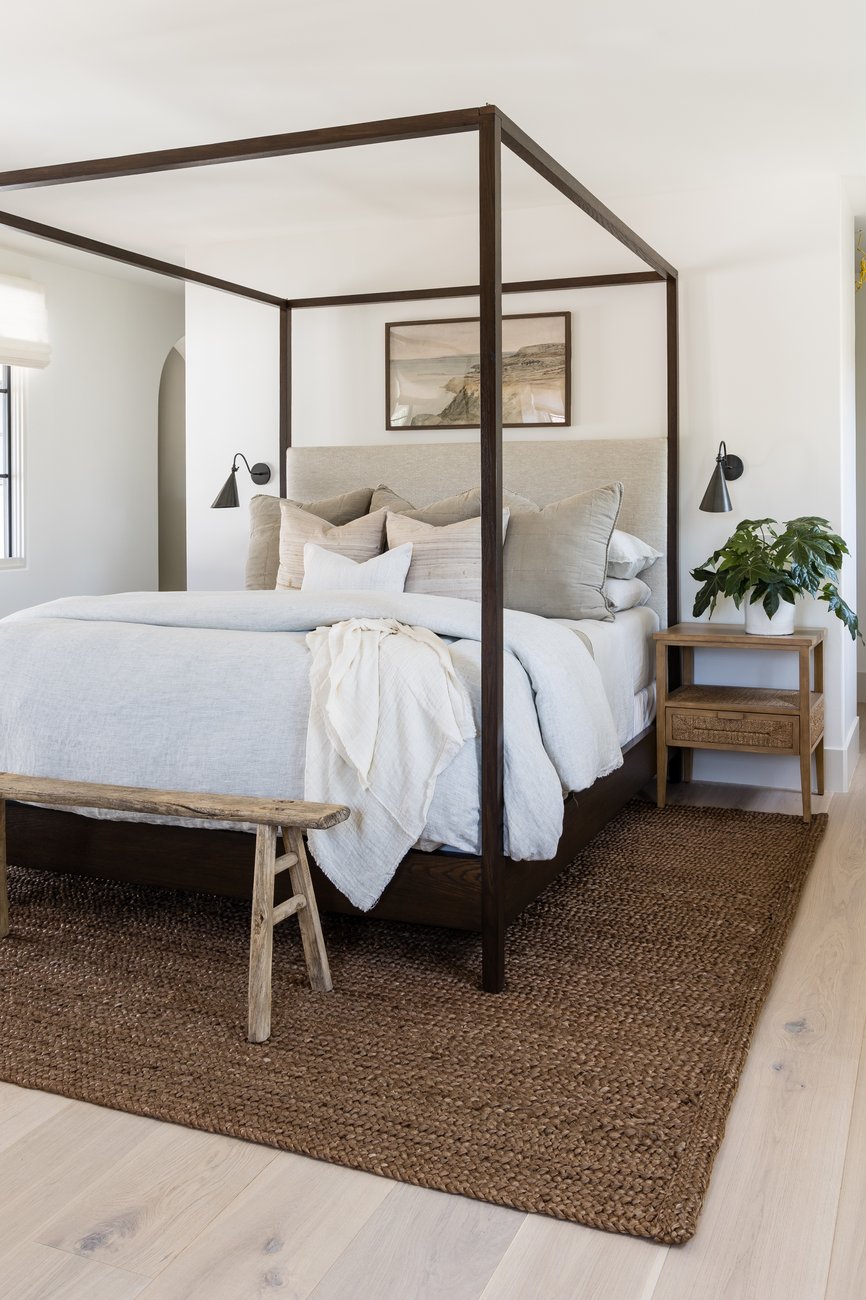
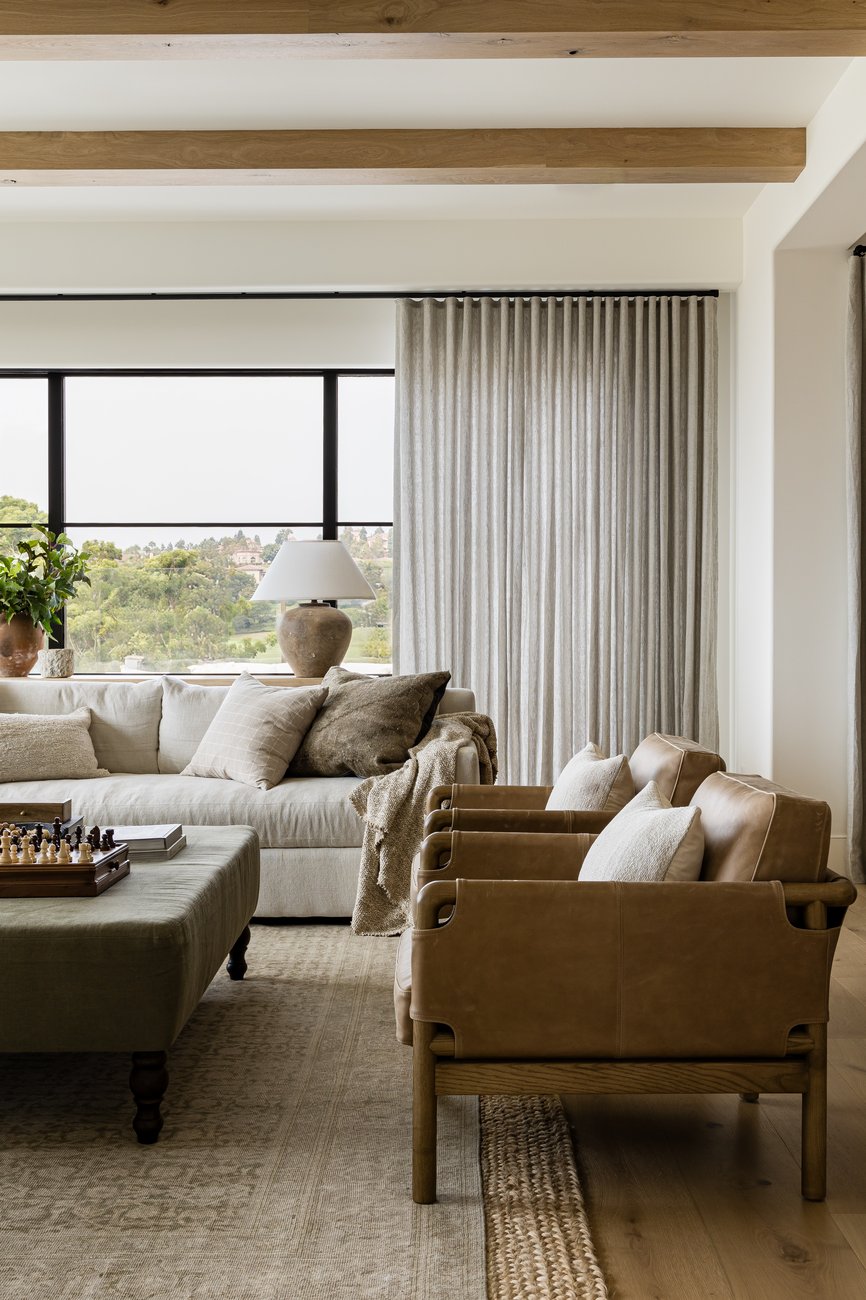
Start with a flatwoven natural — jute, seagrass, or a braided weave — sized by the normal rules, as if it were the room's only rug (front legs on, wider than the sofa). The base's job is quiet: texture, warmth, durability. This is exactly what our Soumen Jute and the Cassis and Torquay braids from Pure Salt x Momeni were built for.
02 // Step two: the topper, at two-thirds
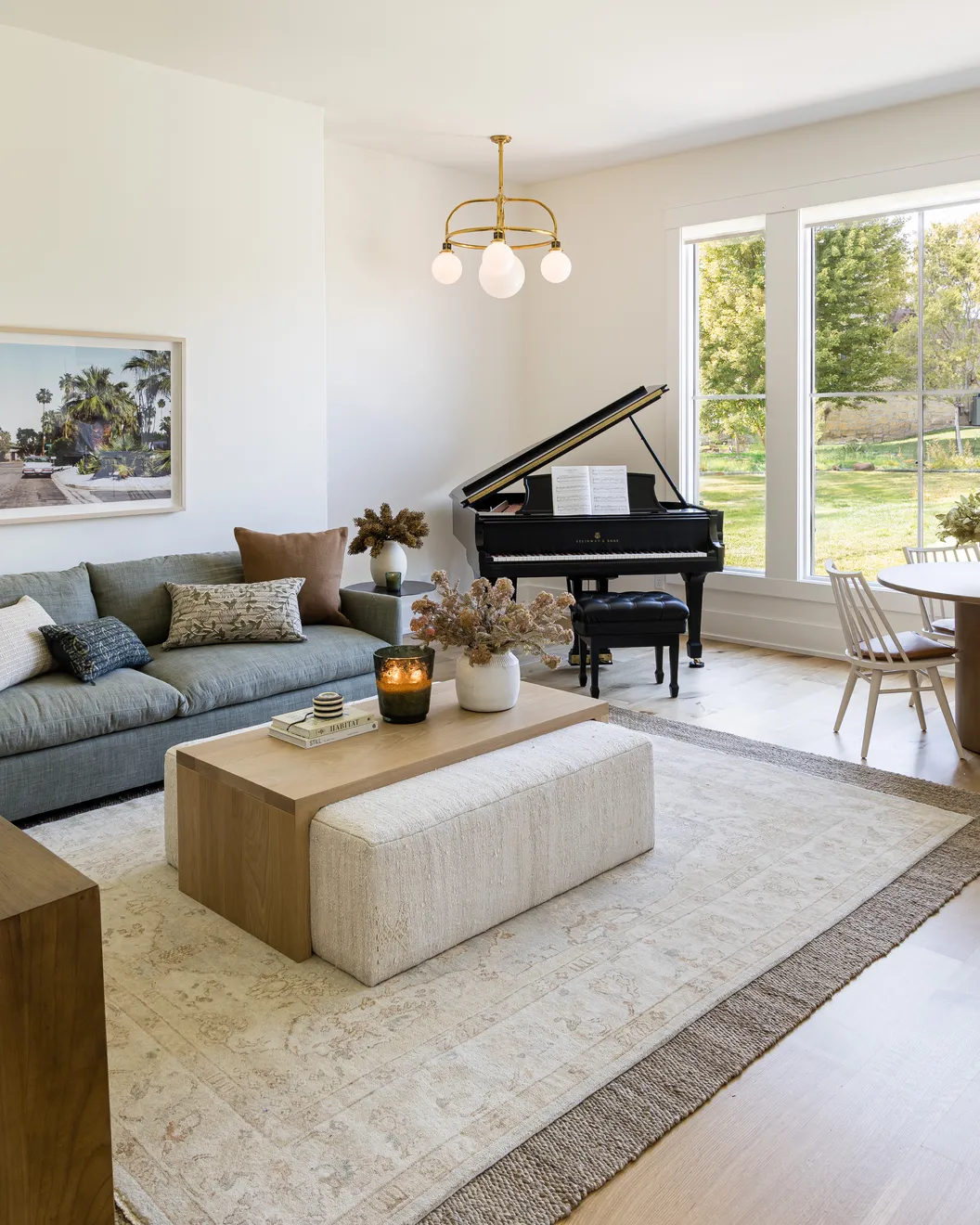
The top rug should run roughly two-thirds the size of the base — a 5x8 or 6x9 over an 8x10, a 6x9 or 8x10 over a 9x12. That visible border of base rug on all sides is the whole trick: it's what reads as intentional. A top rug nearly as large as the base just looks like a rug hiding a stain.
03 // Step three: let the top carry the personality
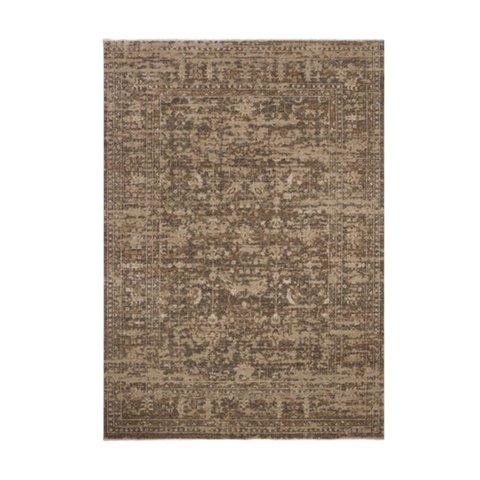
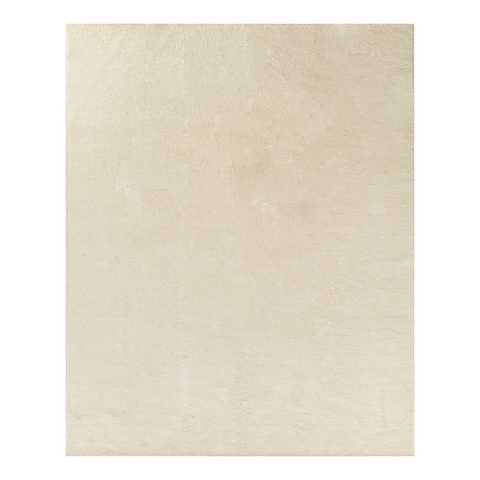
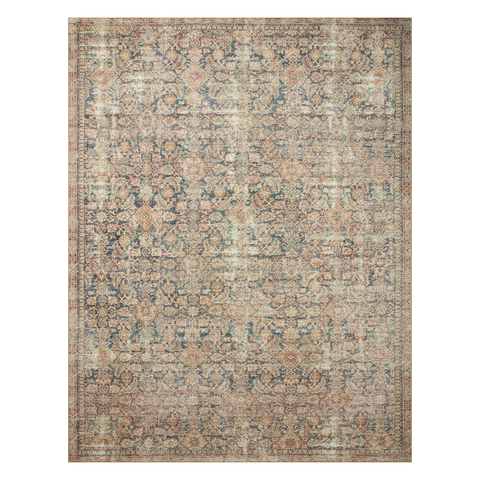
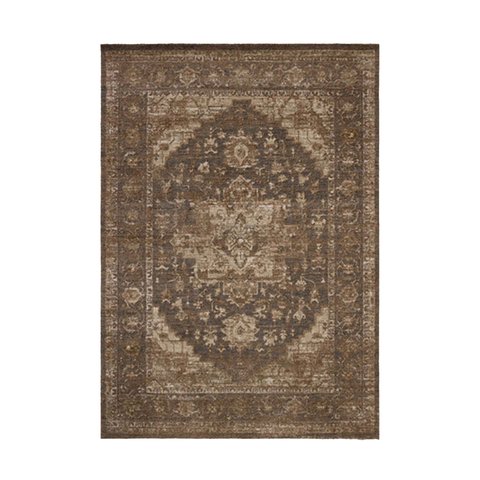
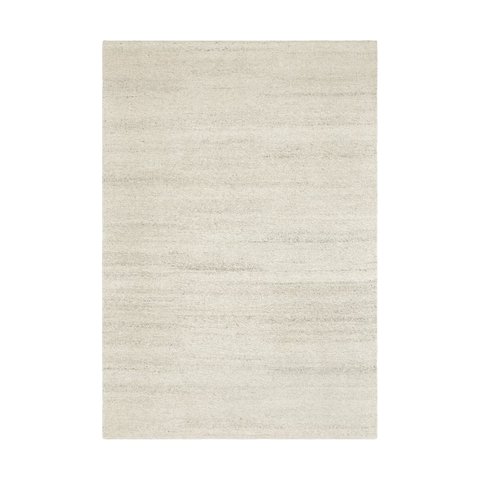
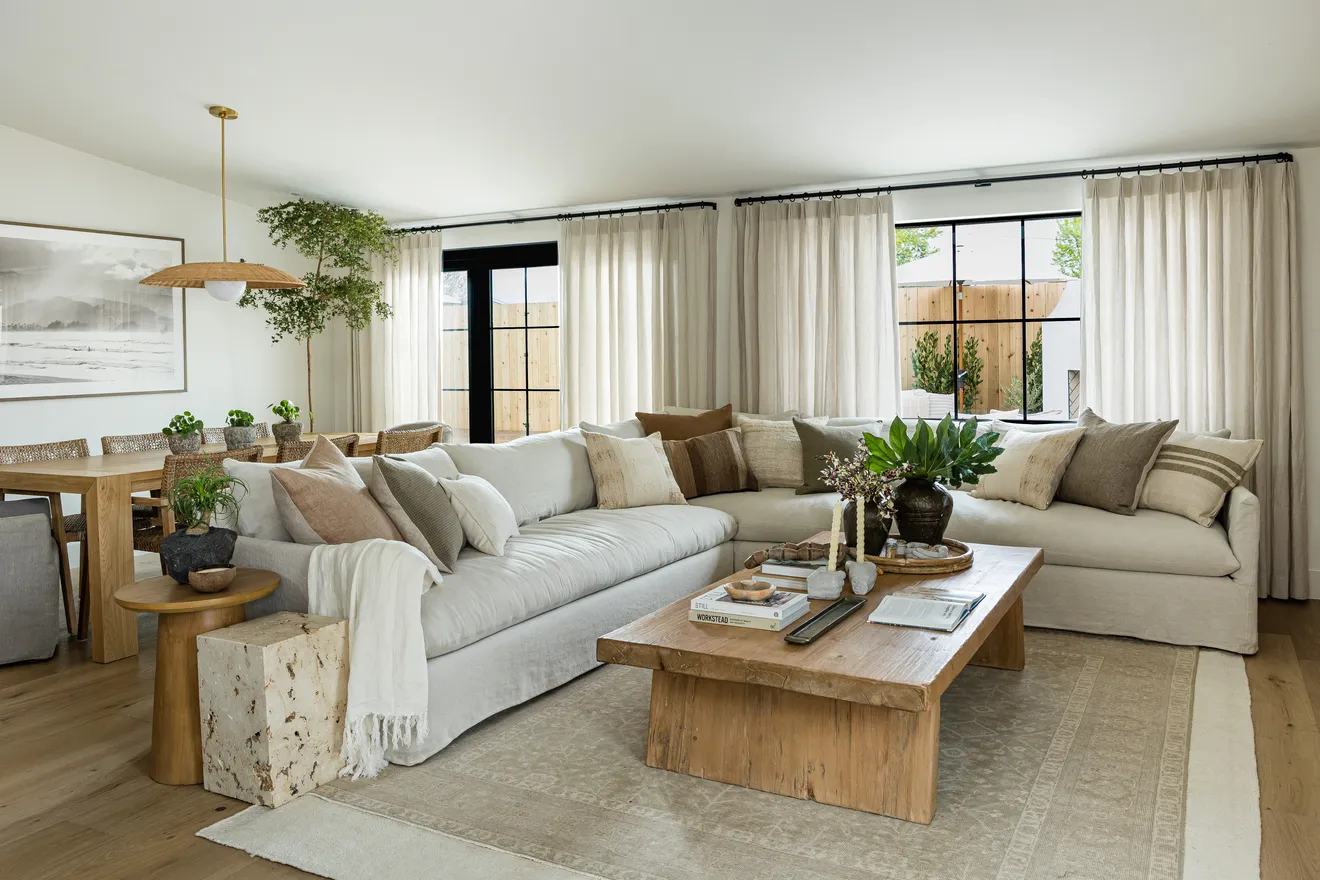
The base bought you permission to be expressive up top — a pattern, a plush pile, a vintage wash, a soft stripe. The topper also takes the gentler life: feet and coffee table rather than chair legs and doorway grit, which is why this pairing lets delicate rugs live in busy rooms.
04 // Step four: anchor it
Center the topper under the coffee table, or shift it deliberately off-center toward the sofa. In casual rooms, a slight angle works — but commit to the angle. A barely-crooked rug reads as an accident; a confident one reads as styled.
Rug Layering Tips
Four layering plays beyond the living room: a small textural layer across the base at the foot of the bed for a soft step-out moment; an area rug over wall-to-wall carpet (firm, low pile, carpet-specific pad) to define a seating zone on floors you can't change; the doorway double — doormat layered over a flat indoor/outdoor rug, two sand-catching layers that look styled instead of utilitarian; and the cozy sub-zone, a plush layer that marks a reading corner without moving a single piece of furniture.
The unglamorous essential: grip. A rug pad under the base, a non-slip liner between layers. Layered rugs that migrate underfoot are the fastest way to fall out of love with this look — and the pad is also what keeps the whole stack safe on stairs-adjacent landings and hard floors.
Layering is chapter four of our complete Rug Guide [ADD LINK WHEN LIVE], which also covers the sizing rules the base depends on cheat sheet here. Or come stand on the pairings in person at the Newport Beach store — texture is the one thing a screen can't sell.