How to Build a Gallery Wall That Feels Collected
Our designers' step-by-step method for a gallery wall that looks gathered over years, not bought in a day — layout, spacing, frames, and what to include.
There are two kinds of gallery walls. The first arrives in a box — matching frames, coordinated prints, a paper template — and looks precisely like what it is. The second looks like it accumulated over years of travel, gifts, and lucky finds, even if it went up in an afternoon. This post is about building the second kind.
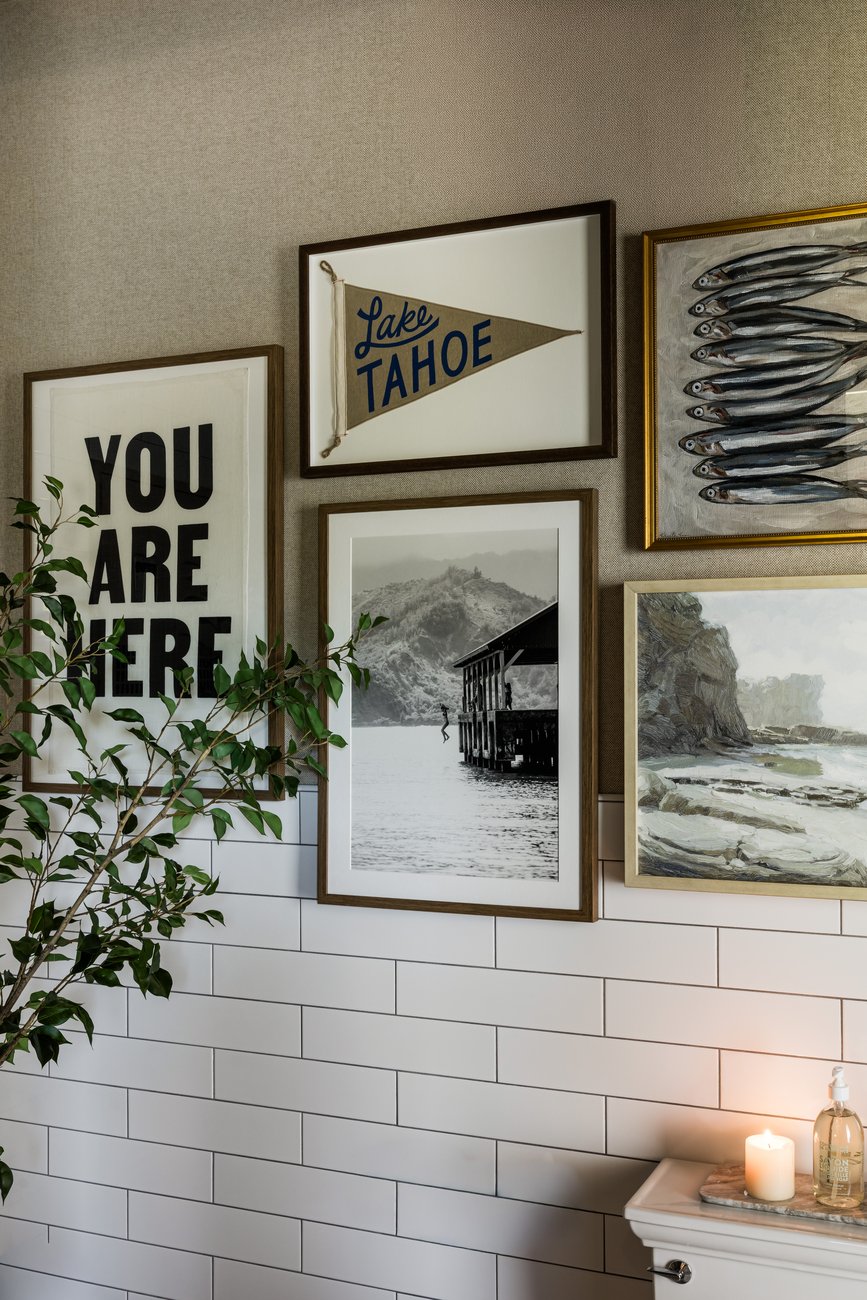
Start with the two-part cohesion rule.
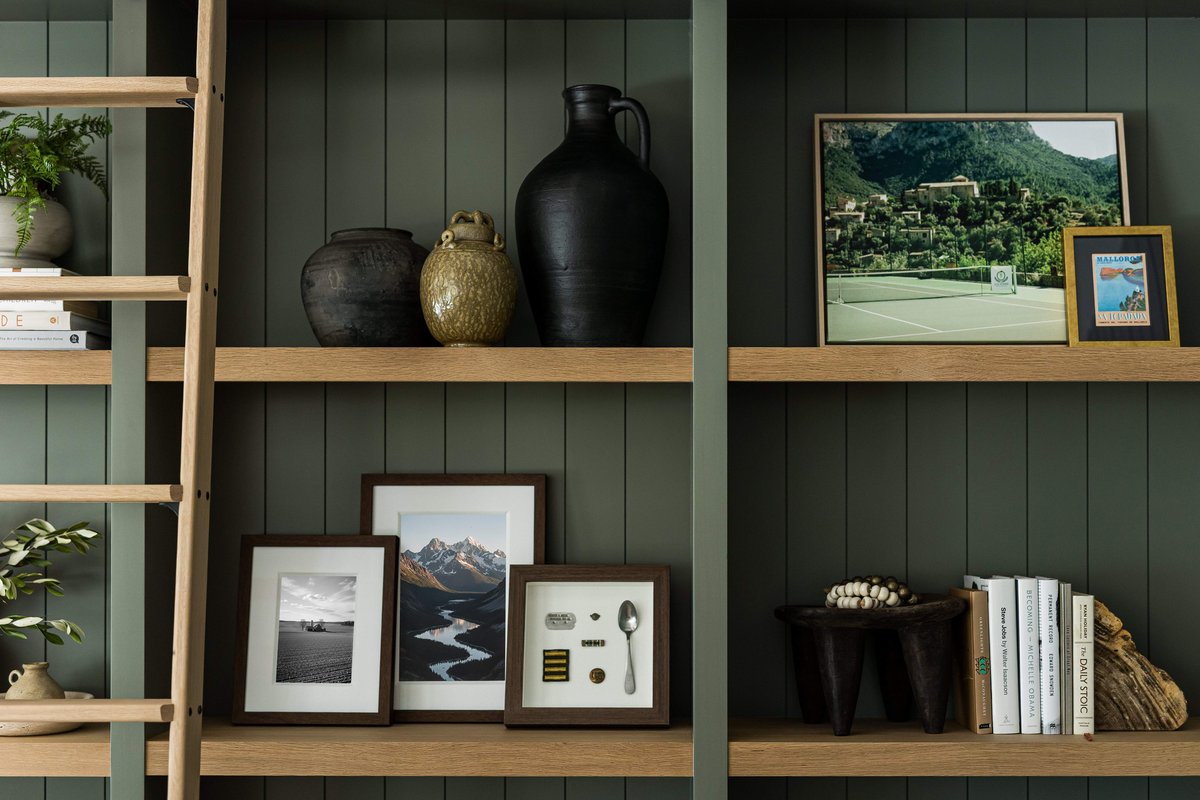
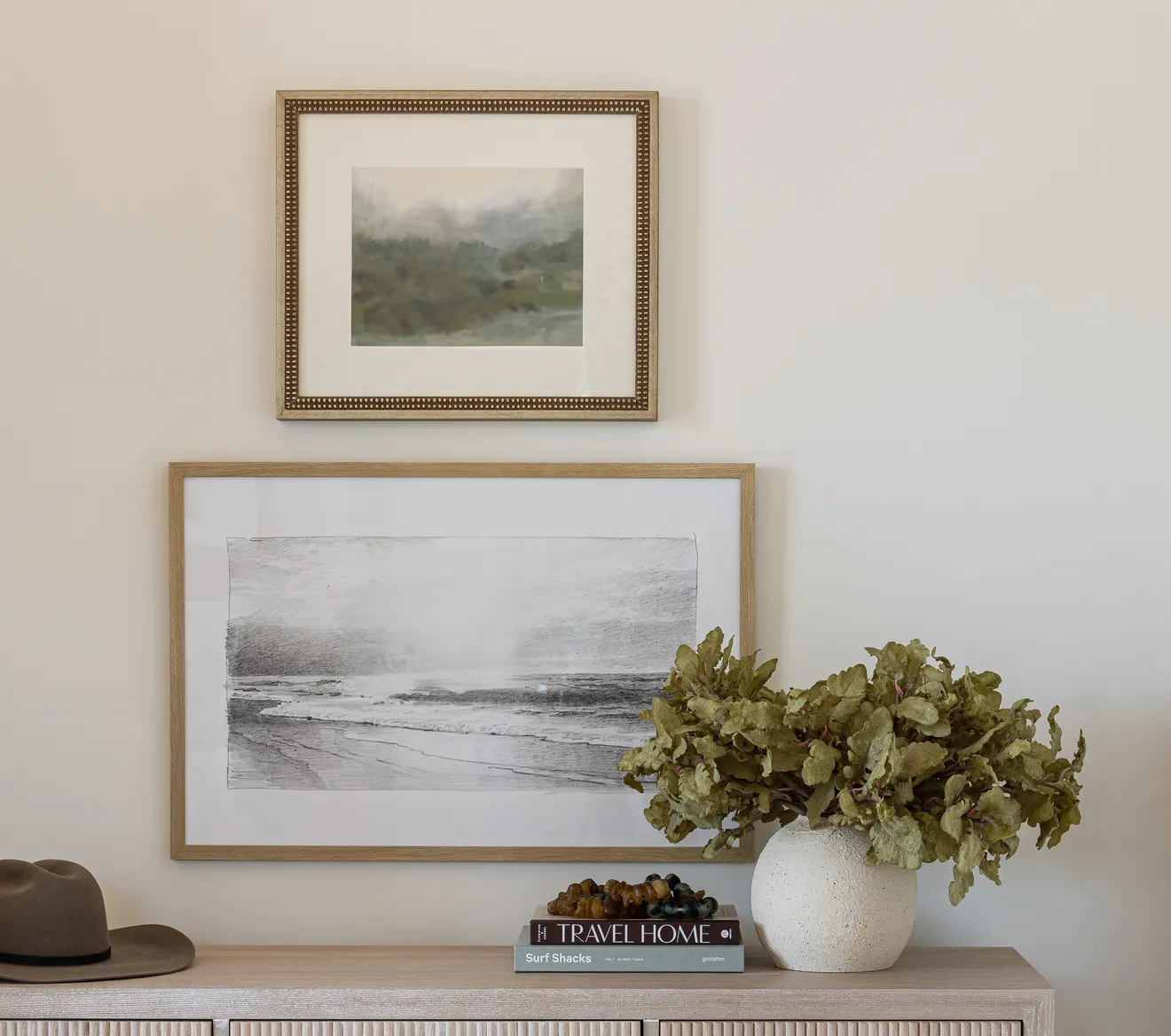
A gallery wall can hold wildly different subjects — a landscape, a figure sketch, a framed textile, a photograph — as long as two threads run through everything. First, a repeated palette: pick two or three tones (for us, that's usually a warm neutral plus a sea or kelp tone) and make sure every piece carries at least one. Second, a frame family: all light woods, or wood with one black accent, or thin gallery frames throughout. Repeat palette, unify frames, and everything else is free.
Gather more than you need.
Pull eight to twelve candidates for a wall that will hold six to nine. Mix scale deliberately — one anchor piece at least 24 by 30 inches, a few mediums, a few smalls. Mix mediums too: a wall of all paintings feels flat in a different way than a wall of all photos. Some of our favorite client walls pair a watercolor landscape with coastal photography, a graphic print for structure, and one framed object for depth — the "one interesting thing" that makes people step closer.
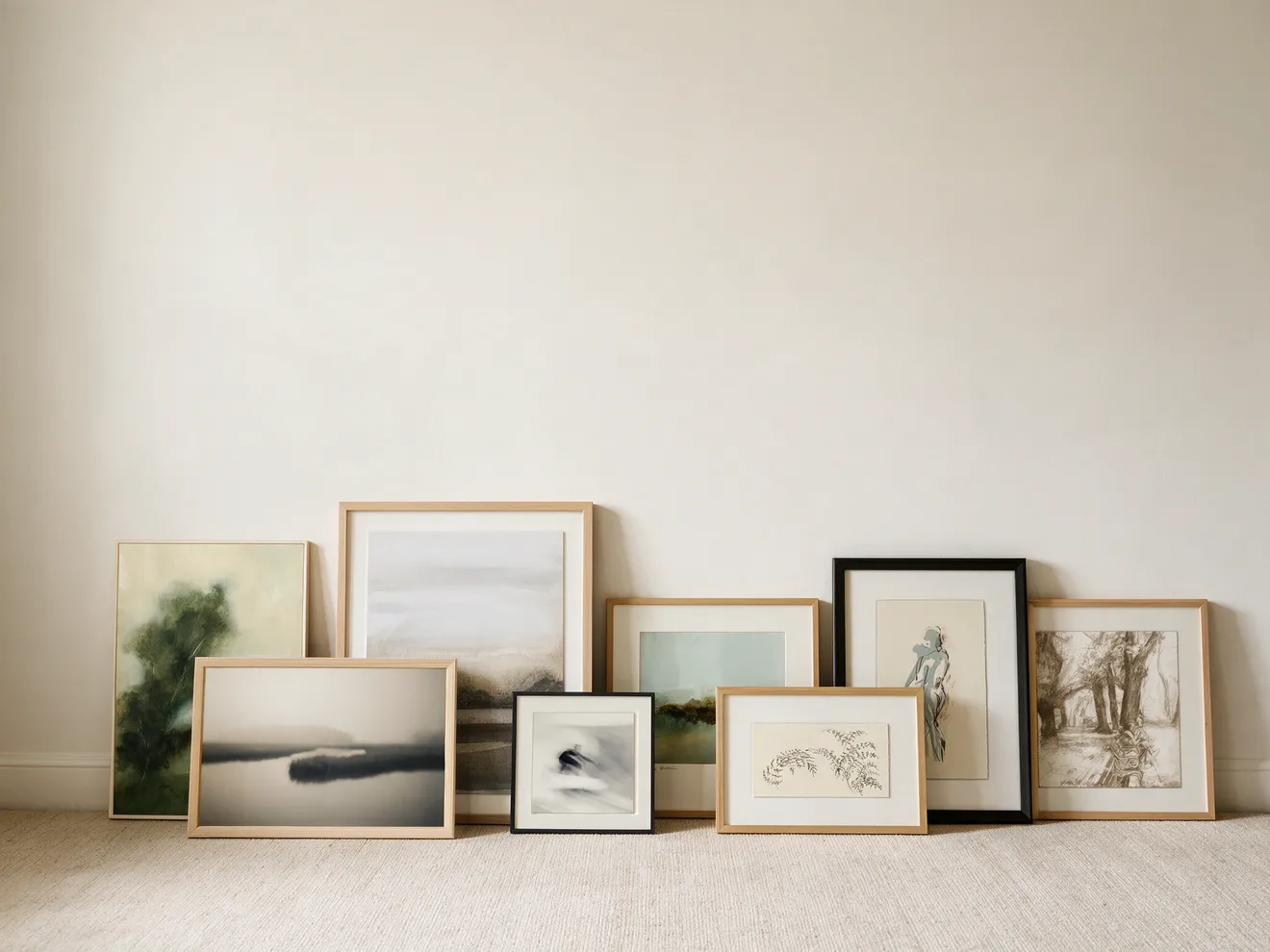
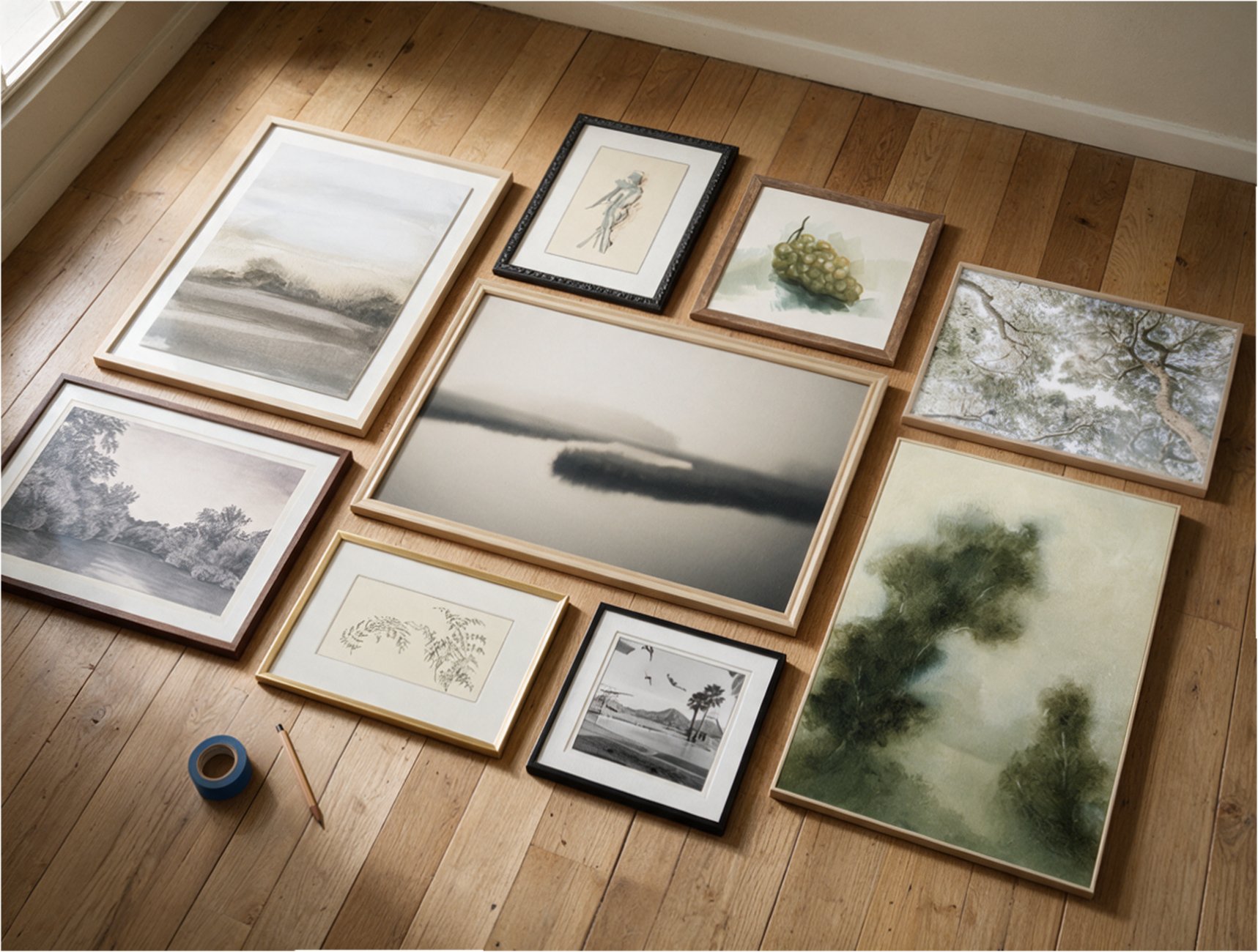
Lay it out on the floor first.
Tape off the wall's dimensions on the floor and arrange there, not on the wall. Place the anchor piece just off-center — dead center reads static — and build outward, keeping 2 to 3 inches between frames throughout. Squint at the arrangement: the visual weight (dark pieces, big pieces) should scatter across the composition rather than pool in one corner. Photograph the final layout before you pick anything up.
Hang from the center out.
Find the center of the whole arrangement and put it at 57 to 60 inches from the floor — the grouping is one piece, as far as height is concerned. Hang the anchor first, then work outward from your photo. Paper templates are fine; a helper with good eyes is better.
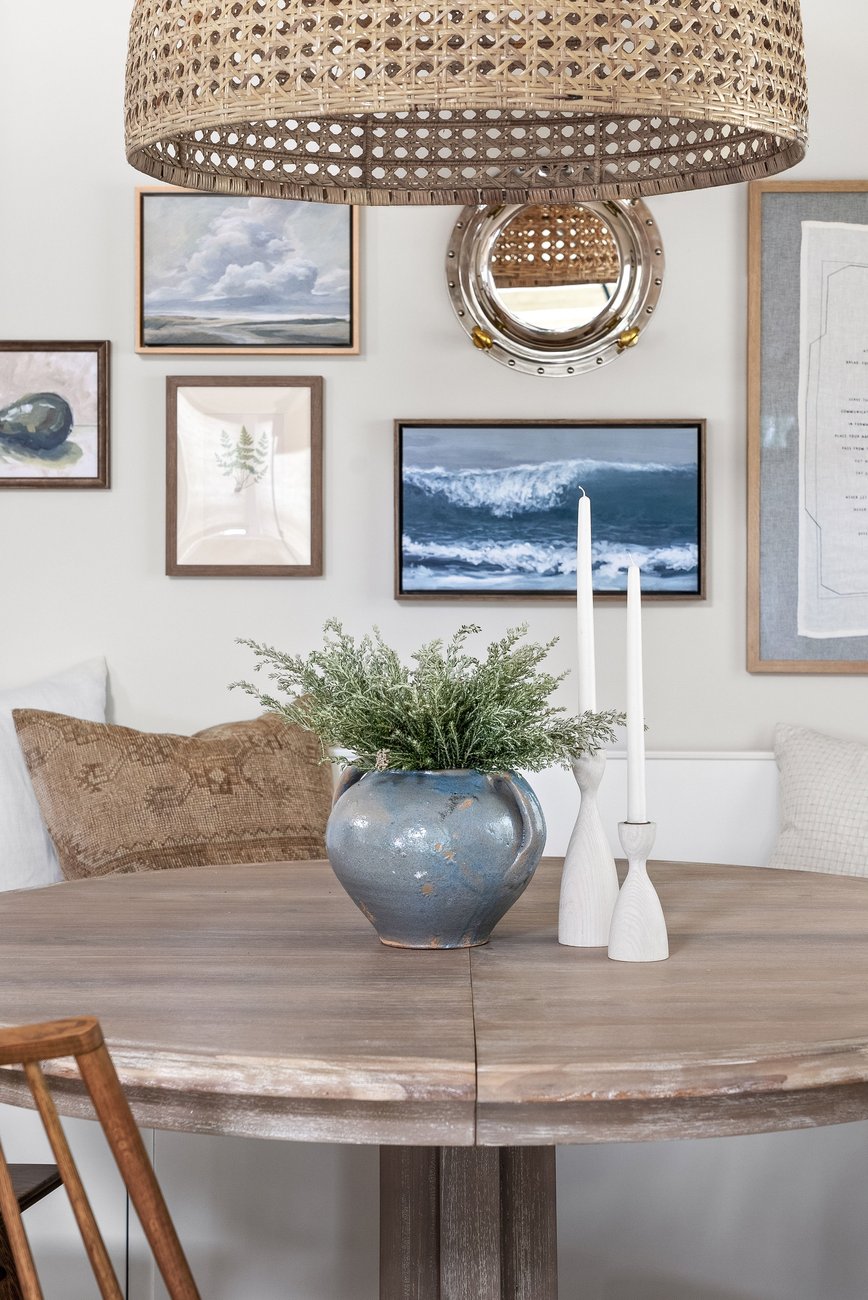
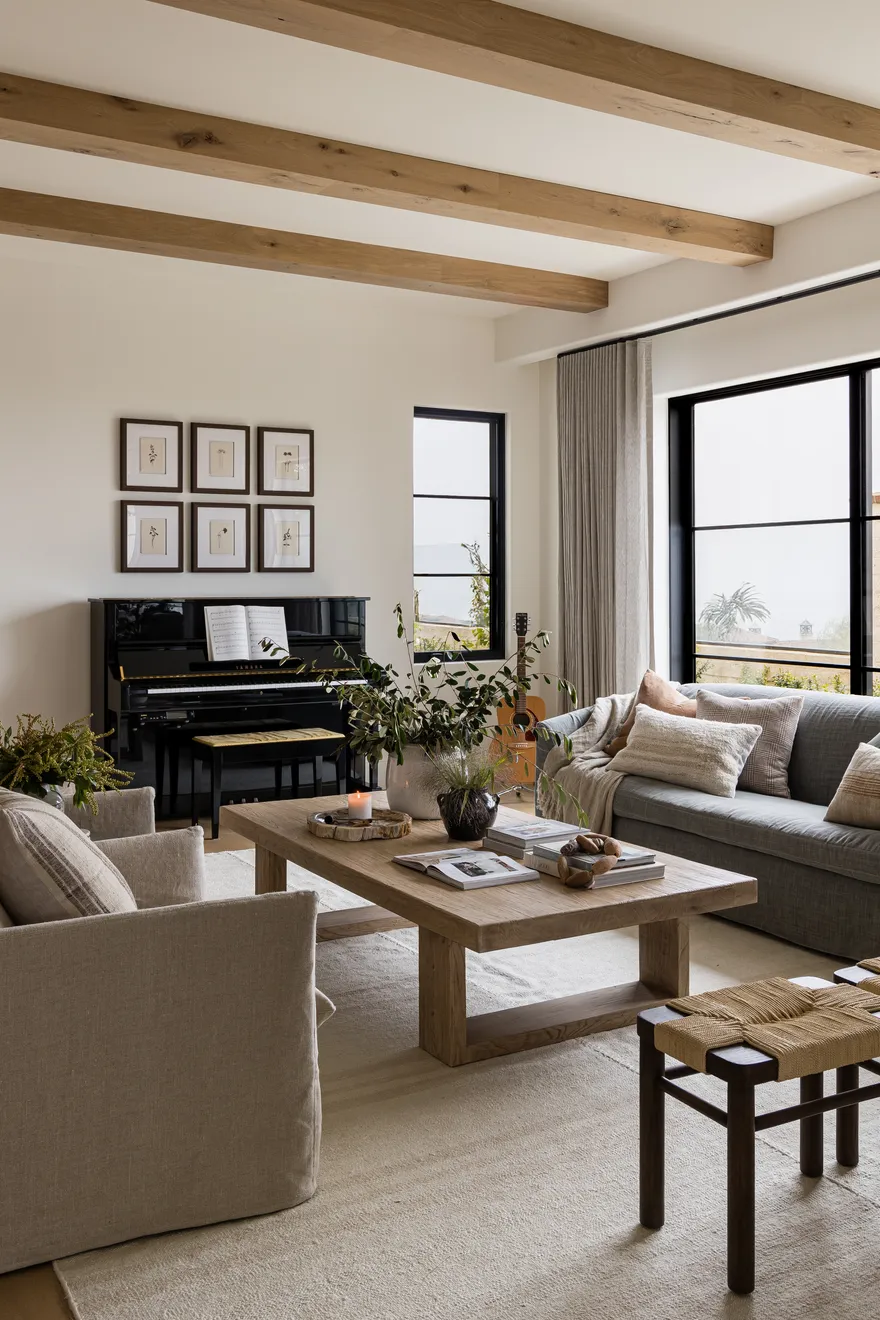
Tips & Tricks
Add a single piece that doesn’t match. The detail that separates collected from kitted is a single deliberate exception: one vintage or ornate frame among the simple ones, one unframed canvas, one small object hung where a frame "should" be. One exception reads as history. Three read as chaos.
Where gallery walls earn their keep: stairways (follow the rake), hallways, family rooms, and offices — anywhere you pass slowly enough to actually look. For the most-seen wall in the house, above the mantle, we usually argue for one confident piece instead; the Artwork Guide walks through all five of our go-to hanging layouts with diagrams.
Need professional design advice? Our Shoppe Design team can help you plan and curate a gallery wall that fits your style and design aesthetic. Schedule a consultation today.